The Developer Retention Playbook I Wish More Founders Used.
The Surprising Antidote: Code Reviews as a Shield.

A few years ago, I watched a brilliant lead developer walk out the door. They weren’t overworked. They weren’t underpaid. They were just tired of being the only ones who understood anything.
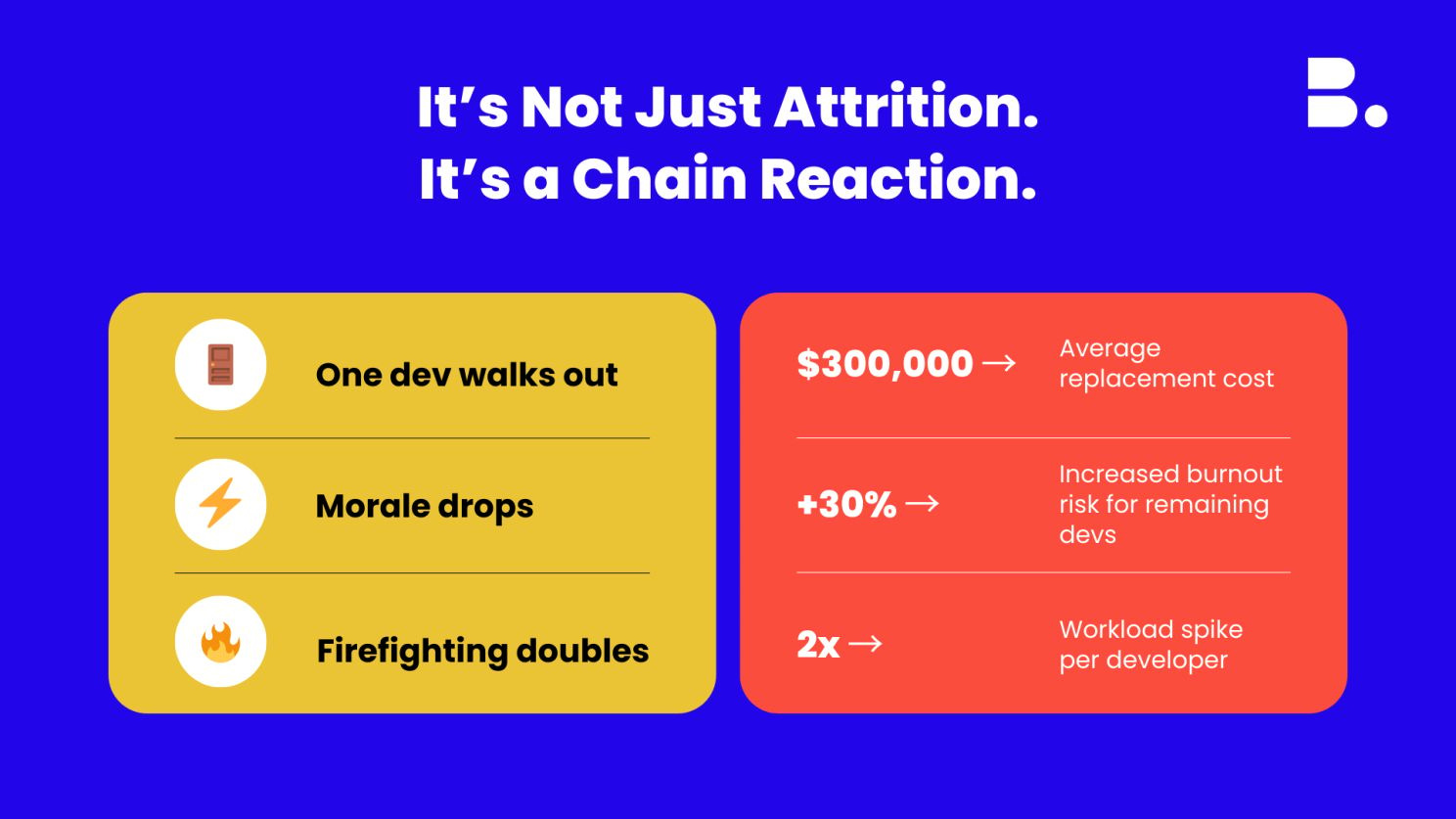
I’ll be honest, losing them hurt. Not just because of the $300,000 replacement cost, but because the team’s morale cratered. Suddenly, everyone else was working twice as hard in an environment that already felt chaotic.
That’s when it clicked for me: burnout isn’t about hours, it’s about chaos.
What I Learned About Developer Burnout
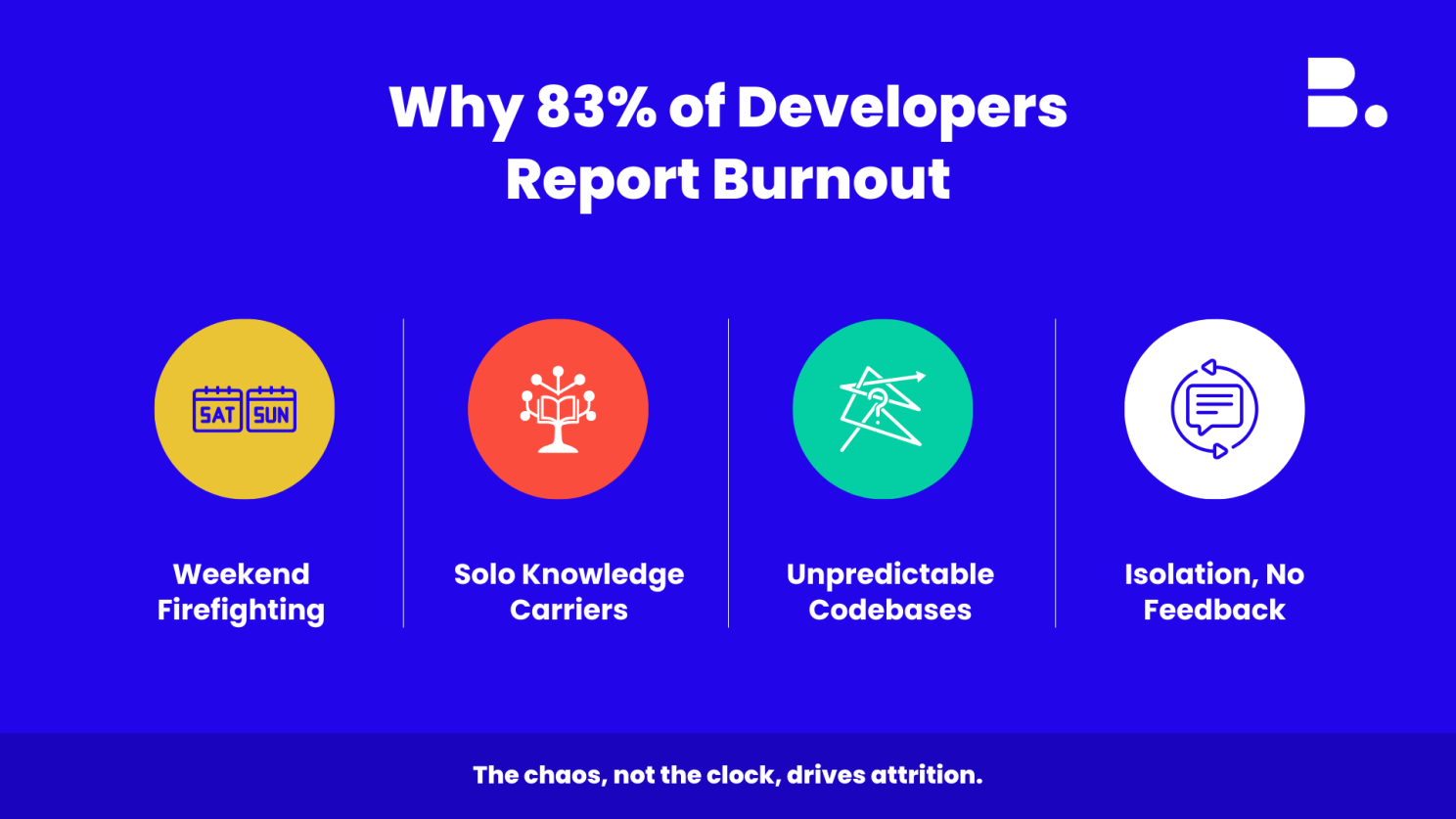
83% of developers report burnout. But from what I’ve seen, it’s rarely because they’re coding too much. They’re burning out because:
They’re fighting fires every weekend.
They’re carrying critical knowledge alone.
They’re working in unpredictable codebases that break at random.
They’re learning in isolation, without feedback or shared breakthroughs.
And the cruel irony? The moment someone quits, the burden on everyone else multiplies.
The Surprising Fix I Keep Coming Back To
Code reviews.
Not the gatekeeping kind that nitpicks variable names. I mean reviews that actually protect developers from the stuff that makes them want to quit.
When I help teams rethink reviews as collaboration, not bureaucracy, everything changes:
Emergencies drop by 40%.
New developers get productive 2x faster.
Retention jumps by 30% because no one feels trapped.
That’s not theory. That’s what I’ve seen with my own clients.
How I Recommend Making Reviews Work
Most teams resist code reviews because they’ve only experienced them done badly. Long, exhausting threads about formatting. Bottlenecks where one overworked senior engineer holds everything up. Tense debates that feel more like performance reviews than collaboration.
But when you design reviews intentionally, they stop draining energy and start fueling team culture. Here’s the playbook I use and teach every engineering leader I work with:
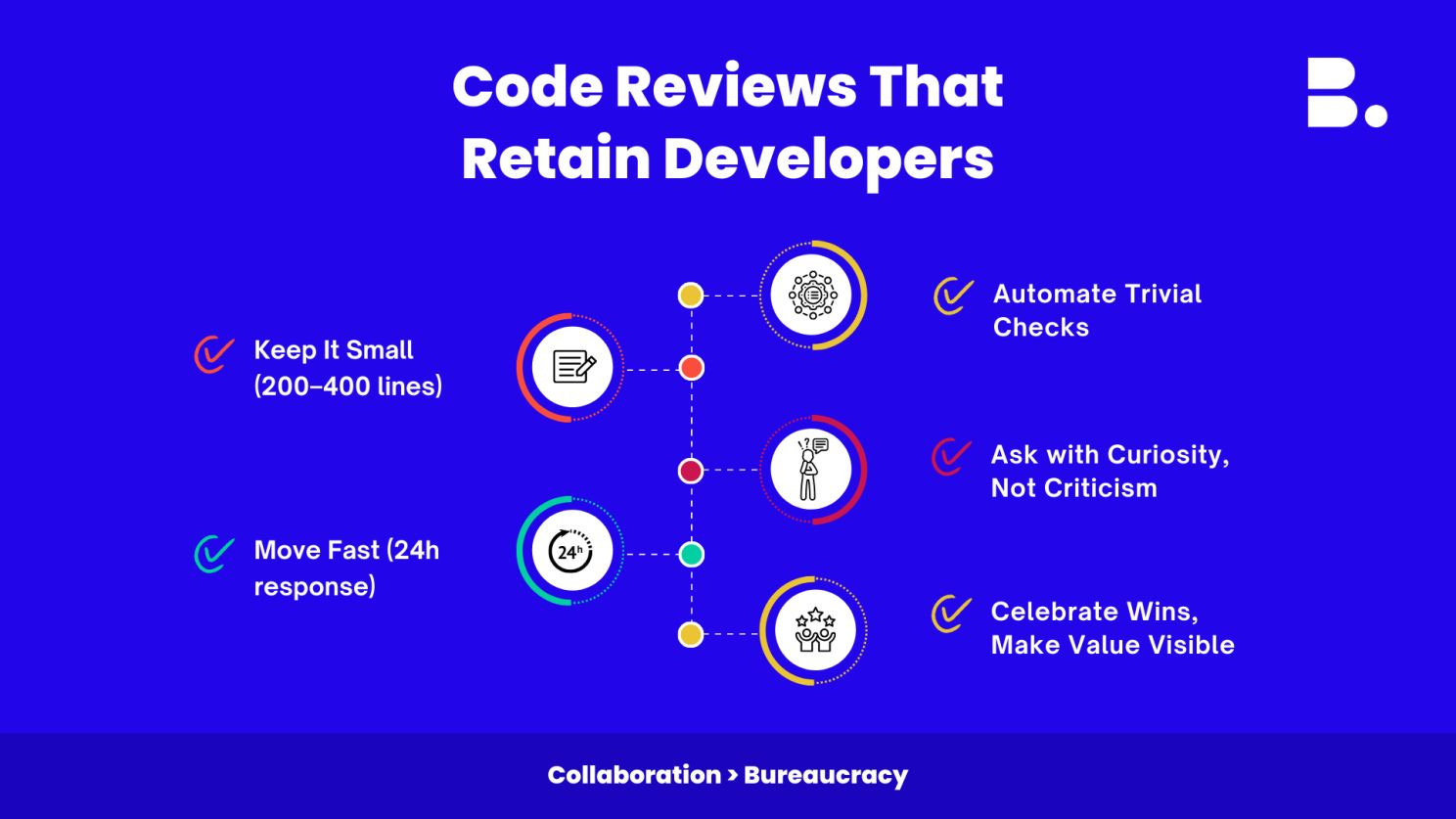
1. Keep It Small → 200–400 Lines Max
Large reviews are where good intentions go to die. Nobody has the cognitive bandwidth to meaningfully review 1,000+ lines of code in one sitting. What happens? People skim, focus on nitpicks (like naming conventions), and miss the structural issues that actually matter.
By capping reviews at 200–400 lines, you:
Make reviews digestible.
Increase focus on architecture and logic, not typos.
Create a natural rhythm where feedback becomes part of daily flow, not a dreaded event.
I’ve seen teams cut review time in half and double review effectiveness just by breaking big changes into smaller, reviewable pieces.
2. Move Fast → Respond Within 24 Hours
Momentum is everything in development. If reviews sit untouched for days, two things happen:
Developers lose context and have to reload their mental model (frustrating).
Work piles up, creating a bottleneck culture where progress is always waiting on someone else.
That’s why I recommend setting a 24-hour response standard, not for full completion, but at least an acknowledgment and first pass. Developers can plan their next steps without anxiety, and the whole team stays in sync.
Speed isn’t about rushing; it’s about keeping energy in the system.
3. Automate the Trivial → Humans for Architecture
Nothing kills motivation faster than fifteen comments about missing semicolons. Tools like linters and CI pipelines are excellent at catching formatting, style consistency, and basic security checks. Let them.
This frees human reviewers to focus on what actually matters:
Does this approach scale?
Are there hidden failure modes?
How does this fit with the overall architecture?
Is the reasoning behind the design sound?
When developers realize reviews are about thinking together rather than policing syntax, participation skyrockets.
4. Ask with Curiosity → Not Criticism
The tone of reviews shapes the culture of your entire engineering team.
Bad review: “This is wrong. Fix it.” Good review: “Interesting, what led you to choose this approach? Have you considered X?”
One sparks defensiveness. The other sparks conversation.
I encourage reviewers to approach reviews as learning opportunities, not judgment sessions. The hidden benefit? Senior developers start modeling humility when they learn from juniors, and juniors feel safe asking questions. That cultural safety nets you massive retention over time.
5. Celebrate Wins → Make Value Visible
Too often, reviews are treated as a burden, something to “get through” before merging. But the moment you highlight wins, reviews start to feel like team accelerators.
For example:
When someone spots a bug that would’ve caused a weekend outage, call it out in the next stand-up.
When a reviewer suggests an elegant optimization, drop it into Slack as a learning moment.
When reviews surface creative cross-pollination between frontend and backend, showcase it.
That visibility flips the script: reviews aren’t about “catching mistakes,” they’re about making the team better together.
The Shift That Changes Everything
When you apply these principles consistently, something profound happens:
Reviews no longer feel like judgment, they feel like collaboration.
Developers stop dreading feedback and start asking for it.
Knowledge flows across the team naturally, instead of being hoarded in silos.
I’ve watched entire teams go from burnout-prone firefighters to thriving, curious collaborators, all by rethinking how they review code.
That’s the kind of culture that keeps your best people engaged, growing, and choosing to stay.
Why I Believe This Is a Business Issue (Not Just a Culture One)
Happier developers don’t just mean fewer late-night Slack messages. They mean:
Lower turnover (and massive cost savings).
Faster onboarding for every new hire.
Predictable work cycles, so teams can focus on building, not firefighting.
For me, that’s the ultimate ROI. You keep great people longer, and they actually enjoy the work again.
If You’re Seeing Burnout Signs on Your Team…
I’d encourage you to step back and ask: Are our code reviews protecting our developers, or draining them?
At Better Software, I’ve helped founders and CTOs flip code reviews into their secret retention tool and build startup software with enterprise-grade foundations, so you move fast without breaking later. Grab our Code Review Culture Assessment and get an instant read on where your process stands today. Just DM me.
Your best developers don’t want free lunches or ping-pong tables. They want to feel like they’re building with a team, not carrying the world alone.
— Jai
CEO, Better Software
Built to scale. Engineered to earn trust.
P.S. The moment developers ask for more reviews instead of avoiding them, you’ll know you’ve cracked it.